Showing posts with label Megan Abbott. Show all posts

NoirCon 2012: Saturday Panels

How could NoirCon 2012 get any better after Friday's panels and the awesome party at the Awards Ceremony? By having Wallace Stroby, Dennis Tafoya, Alison Gaylin, and Megan Abbott talk True Crime. Four of the best and smartest crime novelists out there today, gathered around a table, sharing their knowledge. They're all such good conversationalists and so well-read in their subject, it was a joy and an education to listen to them speak.


"True Crime pulls the lid off the world," Abbott said in her introduction. For True Crime Neophytes such as myself, the panelists were gracious enough to provide a True Crime Canon. I'll put the panelist's name in parentheses after the book.

The Executioner's Song by Norman Mailer (Alison Gaylin)
Hollywood Babylon by Kenneth Anger (Alison Gaylin)
In Cold Blood by Truman Capote (Megan Abbott)
Murder Machine by Gene Mustain and Jerry Capeci (Wallace Stroby)
My Dark Places by James Ellroy (Megan Abbott)*
People Who Eat Darkness: The Fate of Lucie Blackman by Richard Lloyd Parry (Megan Abbott)*
The Poet and the Murderer by Simon Worrall (Dennis Tafoya)
True Story: Murder, Memoir, Mea Culpa by Michael Finkel (Dennis Tafoya)
Wiseguy by Nicholas Pileggi (Wallace Stroby)
*added in conversation after the panel ended


The Keynote Address was delivered by Pulitzer Prize-winning author Robert Olen Butler. His speech centered around the tools of narrative, and the shared language mechanics of literature and film. Comparing examples from Sam Peckinpah, Charles Dickens, Dashiell Hammett, The Bible (The Book of Judges), and The Matrix, Butler shows how the core concepts of slow-motion, establishing shots, visual movement, and montage are not just cinematic components, but the basic building blocks of storytelling. Butler concluded his address by expressing how "The intellectual electricity in this room is wonderful." He was dead-on. One of the things that makes NoirCon so wonderful is that it isn't just a writer's conference, or a gathering of fans, or a reading series, or an academic conference -- there's a little bit of each of those, but they add up to something much greater. Passion and community, as much as creativity and scholarship, form the crux of NoirCon. Its relatively small size (about 100 people), and welcoming and supportive atmosphere, mean that everyone gets to meet each other, and there's no pretensions to make anyone feel left out. It's a remarkably open atmosphere, and a great place to meet people and have genuine conversations.


Next, Kenneth Wishnia, William Lashner, and Jay Gertzman took the stage to discuss Jewish Noir. Wishnia went all the way back to the Old Testament. Lashner read an excerpt from Kafka's The Metamorphosis and discussed how that book, along with The Trial, could be seen as the forerunners to Noir. Gertzman discussed religious and spiritual tropes in Goodis' fiction.


Before the next panel, Ed "Philly Poe Guy" Pettit and his world-class beard handed out some raffle prizes. Lulu Lollipop and Charles Benoit assisted. The money from the raffle will go to Project H.O.M.E., an organization that helps the homeless in Philadelphia.


After some great prizes went to their respective winners, NoirCon took a sensual turn: BURLESQUE NOIR. The panelists included photographer Frank De Blase; Dr. Susana Mayer, Ph.D., founder and host of the Erotic Literary Salon; Lulu Lollipop, a burlesque dancer and director with the Peek-A-Book Revue; and sexologist Timaree Schmit, Ph.D. 


The panelists discussed the art, craft, and history of burlesque and its relationship to changing social and sexual mores in the US. It was a surprise to learn that in the 1930s, burlesque was more liberal and less conservative than in the 1940s and 1950s. The four panelists had a blast on stage with each other, riffing off each other's comments, weaving a provocative and enlightening discussion about sexual politics and history, and the artistic craft of burlesque. It's interesting to think about the history of pulp and paperback fiction in regards to their discussion, and the changing presentation of sexuality and the evolution of language and written images. Frank De Blase even read a passage from one of Richard Prather's Gold Medal novels. 


After the panel, Ed's duties as co-Master of Ceremonies compelled him to pose with two of the Burlesque panelists. All in the name of duty.


Concluding Saturday's panels was an event that soon become the stuff of legend and lore: a conversation between Duane Swierczynski and Lawrence Block. Not only are they both phenomenal novelists, but they're also damned funny. I've never heard so much laughter at NoirCon -- Block's droll delivery and Duane's improvisational quips are well known, but when combined the effect is simply awesome. They build off each other, instinctively setting up punch lines for the other to execute. Seriously, if they want to take this act on the road, I think Block and Swierczynski have a second career in comedy in the works.


But the dynamic duo did more than just make us laugh -- they delivered an impressive and insightful interview about one of crime fiction's most distinguished careers. As Otto Penzler pointed out in the Q and A, what was so unique about the conversation is that the obvious subjects of Matthew Scudder and Bernie Rhodenbarr weren't mentioned at all. Instead, Duane grilled Block about his early days as a reader for Scott Meredith, his early books for Gold Medal, as well as his many sleaze novels under pseudonyms for Beacon, Nightstand, Midwood, and others. When I asked about the editorial processes for those paperback houses, Block told me that at Midwood and Nightstand there were almost no edits because they hired writers who didn't need it. At Beacon, however, the editor there was under the assumption that everything needed editing ... lots of editing. Even if it didn't. He had a team of editors whose job it was to edit and re-write and change things, often needlessly. Block recalled one novel where all of his compound sentences were split in two. The editors made the edits because, if they didn't, they would have been out of a job.


When asked by Otto Penzler to select his favorites among his own books, Block chose When the Sacred Gin Mill Closes and Small Town.


During the Q&A, Wallace Stroby asked Block, "Can writing be taught?" Block responded, "I don't suppose so. What an instructor can do is create an environment in which a writer can teach himself." Good advice, indeed.

That brought Saturday to a close ... the panels, at least. That night, we gathered at the 10th floor bar of the Hilton Garden Inn and talked until Sunday morning came around. I went home a little after midnight because, at that time, I turn into a pumpkin. Pumpkins need rest. Plus, there were still two more panels on Sunday morning, and more raffle prizes!

Stay tuned for more on NoirCon 2012.

"The New Faces of Suspense" at Mysterious Bookshop with Megan Abbott, Duane Swierczynski, Q.R. Markham, and Lawrence Block

Last night at the Mysterious Bookshop in Tribeca, four of crime fiction's brightest and best gathered for a panel entitled, "The New Faces of Suspense." Discussing their latest books were Duane Swierczynski (Hell and Gone, Mulholland Books), Megan Abbott (The End of Everything, Reagan Arthur Books), and Q.R. Markham (Assassin of Secrets, Mulholland Books), with MWA Grandmaster Lawrence Block (A Drop of the Hard Stuff, Mulholland Books) moderating. When you get four writers as talented--and witty--as these together on the same stage, you know you're in for a treat. This crime fiction crew certainly did not disappoint.

Block's opening remarks referenced a Fred Allen quip about Ed Sullivan, and how anyone could do his job, even a dog, as long as you rubbed meat on the performers. Without missing a beat, Duane chimed in, wondering why no one had rubbed meat all over him yet? Block's classy retort was that, if Duane hadn't done it himself yet, there was nothing he could do about it now. All four writers had a terrific and comical rapport with one another, and they were cracking wise all night long.

Megan talked about how at first The End of Everything seemed an unlikely follow-up to her earlier period novels, but how ultimately she was able to locate the heart of noir in the world of teenage girls in 1980s Midwestern Suburbia. Noir really is universal and inescapable! Megan's books keep getting better and better, and if you haven't read this one yet, you're really missing out! Duane discussed his first attempt at writing a sequel, and his need for creative challenges. After finishing the first book in the Charlie Hardie trilogy, Fun and Games, he decided to set the new book, Hell and Gone, largely in a prison. I haven't read this new one yet, but Fun and Games was...well, "fun and games," but the bloody, violent, explosive kind, which is precisely the kind I like! (Read my reviews of both Megan and Duane's books here at the Los Angeles Review of Books.) Q.R. Markham discussed Assassin of Secrets, the first in his trilogy about Cold War-era spy Jonathan Chase, and how it was inspired by his love for both classic espionage fiction (like Ian Fleming and Eric Ambler) and for men's action novels like The Butcher and The Penetrator. I haven't read this one yet, but I've been looking forward to it for a long time now, so I'm excited I finally was able to buy a copy at the reading! There will be a review here at Pulp Serenade once I finish it.

Some of the highlights of the Q&A included what music each of the writers listened to while working. Megan listened to what she described as music you'd hear in a 7/11 parking lot in the late '70s/early '80s, such as Mott the Hoople; Duane said he stuck mainly with soundtracks and music without lyrics; Q.R. originally intended to listen to nothing but spy soundtracks by Hugo Montenegro and Lalo Schifrin, but that wound up being too cheesy, so he such with Dub and Reggae for the first book in the series, and Samba and Bossa Nova for the second. Each of the authors was also asked to name their book of choice to convert a "literary snob" into a crime fiction fan. Megan chose Raymond Chandler's Farewell, My Lovely; Duane suggested Don Winslow's The Power of the Dog, or something by George Pelecanos; and Q.R. went with Graham Greene's "entertainments," Eric Ambler's Coffin for Dimitrios, or Chandler's The Long Goodbye.

And what's next for these authors? Megan hinted that she is working on something about the "dark heart of a cheerleader"; Duane is working on something lean in the style of James M. Cain's The Postman Always Rings Twice; and Q.R. is finishing up his Jonathan Chase trilogy. And what about Lawrence Block? "It's a secret," he cleverly answered.

All in all, a terrific reading! Here are some more pictures from the event.


"The Criminal Kind" Debuts at The Los Angeles Review of Books

Over the weekend, my new crime fiction column, "The Criminal Kind," debuted over at The Los Angeles Review of Books. In this first installment, I reviewed five books:

Duane Swierczynski
Fun & Games
Mulholland Books, June 2011. 304 pp.
"Duane Swierczynski is the Wile E. Coyote of crime fiction. His novels are filled with chases, explosions, and, amidst all the mayhem, a dash of philosophy about the absurdity of existence. "

Jason Starr
The Pack
Ace Books, June 2011. 352 pp.
"The Pack is one of Starr’s most realistic and relatable novels yet."

Megan Abbott
The End of Everything
Reagan Arthur Books, July 2011. 256 pp.
"The End of Everything is Abbott’s most refined and rapturous offering yet. "

Sara Gran
Claire DeWitt and the City of the Dead
Houghton Mifflin Harcourt, June 2011. 288 pp.
"Claire’s journey through New Orleans is thick with atmosphere, and while she herself might be interested in heady concepts, the people she meets have complex problems that are all too recognizable, and that don’t lend themselves to easy solutions."

Mickey Spillane and Max Allan Collins
Kiss Her Goodbye
Houghton Mifflin Harcourt, May 2011. 288 pp.
"Dexterous and dynamic plotting, swift and explosive action, snappy dialogue, graphic metaphors, and energetic characters that come alive: this is action-mystery par excellence."

To read more, check out The Los Angeles Review of Books.

Interview with Megan Abbott

An interview I conducted with Megan Abbott about Bury Me Deep earlier this summer was recently published in The Brooklyn Rail. Those in New York City can pick up copies, but it is also available online to read. For those that haven't read her book yet, it is without a doubt one of the best novels you'll read this year. I also reviewed the book here on Pulp Serenade when it was released a couple months back. Here's a brief excerpt from the interview:

Gallagher: Your first three books all take place in the 1950s, and your new one is in the 1930s, which is really the heyday of the crime fiction pulps. Is there no connection?

Abbott: I’m sure there is. This was not intentional, but it was probably the absence of certain kinds of women from those books that made me want to write those kinds of women in that time period. But I would say that’s the most direct connection. It was to write women into those books in a way that didn’t feel just like spider-women. There are two parts of my brain that I don’t want to meet. I don’t want to apply my analytical approach to my writing. I think my books would be terrible if I did that, and I have trouble even thinking about them after I’ve written them in an analytical way, even though everything else I read I think about in an analytical way. I try to keep the processes very distinct.

Read the full interview here at The Brooklyn Rail.

Books I am Looking Forward To Reading

I know we all have ever-growing TBR piles (and, in some cases, many of them), but that doesn't stop us from eagerly anticipating new releases. Here are just a few of the recent and upcoming books that I am looking forward to reading.

What about you - any books you are particularly excited for?

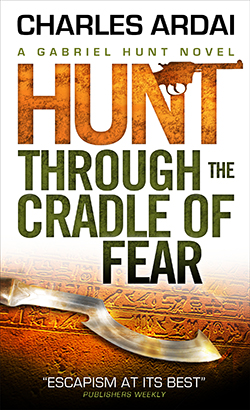
Hunt through the Cradle of Fear by Charles Ardai (Leisure Books)

I really enjoyed the first book in the series, Hunt at the Well of Eternity by James Reasoner (interviewed here), and Ardai's three entries in the Hard Case lineup (Little Girl Lost, Songs of Innocence, and Fifty-to-One) are among the best of the bunch, so this should be exciting.

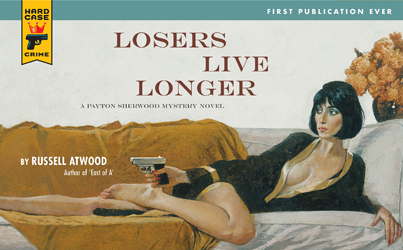
Losers live Longer by Russell Atwood (Hard Case Crime)

Been hearing good things about this from a lot of different people. Plus, the horizontal art by Robert McGinnis is terrific. This one I definitely need to have on my shelf.

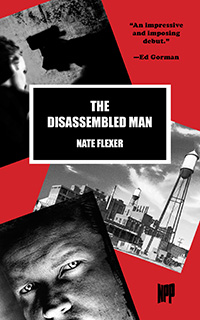
The Disassembled Man by Nate Flexer (New Pulp Press)

The best first paragraph to a review I've read all year comes from Jedidiah Ayres. As soon as I read it, I knew I had to get this book. "A wince-inducing front row seat to a soul shredding. It’s so unrelentingly dark, so hopeless and dank, that when the humor rears its fugly head you’ll want to wretch because you laughed. You will hate yourself for those laughs. But you will laugh. And then puke. And maybe chuckle sickly for a few days. And throw up in your mouth a bit. It's not funny. Sort of though."

Death Ground by Ed Gorman (Leisure Books)

Gorman's crime fiction is some of the best stuff out there right now. And word is that his Westerns can be even darker. If you haven't read his latest, The Midnight Room, check it out. (And here's an interview I did with Gorman earlier this summer.)

Between the Dark and the Daylight edited by Ed Gorman and Martin Greenberg (Tyrus Books)

Hell of a lineup of writers for this anthology - the ones I am most looking forward to are Patti Abbott, Charles Ardai, Bill Crider, Megan Abbott, Martin Edwards, Doug Allyn, Bill Pronzini, and Joyce Carol Oates. And that's not even a third of the authors included.

Panic Attack by Jason Starr (Minotaur)

I started the summer off with Fake I.D. (Hard Case Crime) and now, at summer's close, Panic Attack is released. Great way to bookend the season, right? This one I already picked up when he was speaking at The Mysterious Bookshop in Manhattan. Really fun event, and I got the book signed. Yeah, I'm a nerd, I think going to a book reading and getting books signed makes for an exciting week (if not month). Anyway, this book is sure to be awesome and twisted.

"Bury Me Deep" by Megan Abbott (Simon and Schuster, 2009)

“Says you brought him ruin and hellfire and yet he loves you still.”

Marion, sprung back to vivid life, looked up fast and wanted to laugh. “Brought him to ruin. Oh, isn’t that a fairy tale, a dreamy little love book to end all.”


In Bury Me Deep (Simon & Schuster, 2009), her fourth novel, Megan Abbott buries one of the longstanding mythologies of noir literature: it’s all the fault of the femme fatale. Exhuming the spirits of so many fallen women condemned by male protagonists who felt threatened and persecuted, Abbott turns the tables and tells the story from another perspective. Instead of the woman who enters the man’s life and brings him to ruin, what if the story were told from her perspective? What happens if you hold a mirror up to the quintessence of noir? What will the reflection reveal?

Abbott’s answer is that the mirror only gets darker – much, much darker. Written as though in a rhapsodic fever, Bury Me Deep is her most absorbing and affecting novel yet. Her characters are a doomed and tragic lot on an irreversible decline to despair, and no one is further down the path than Marion Seeley. Her husband is an ex-junkie doctor who has lost his medical license and left her alone in a new city to fend for herself while he takes a job in Mexico and tries to get clean. Working as in a medical clinic, Marion is taken under the wing of Louise Mercer, a nurse who knows all the ins and outs of not only the clinic – but also the city, and its many secrets. Naïve at first, Marion slowly allows Louise and her companion Ginny to introduce her to the seedier side of life, and gradually she becomes consumed by myriad forms of pleasure and vice. And then she is introduced to Joe Lanigan, and everything changes.

You are Pandora, Joe Lanigan had said. You came to town with that beautiful little box I had to, had to open.

Their affair devours Marion’s life, threatening her job as well as her relationship to Louise and Ginny. Passion turns to jealousy and uncontrollable rage, and soon Marion finds herself on the run to Los Angeles to dispose of the bodies, and all the while only one thought clouds her mind: getting Joe back, no matter what it takes.

Based off the real-life case of “Trunk Murderess” Winnie Ruth Judd, a notorious Depression-era headliner, Abbott uses fiction to investigate the untold stories and motivations that never came out during the trial, or which remained hidden behind closed doors and cold, dead lips. What were the forces acting upon her – environmental pressures? broken promises from manipulative men? social taboos that prejudiced the city against her? – that influenced her actions and decisions, and buried her so deep in desperation that there was no way out except to go deeper, always deeper.

While Marion may be the central protagonist of the novel, arguably the most indelibly haunting portrait is that of Louise and Ginny. Unlike Marion, these two stick to their debauched lifestyle not because any emotional need or uncontrollable desire, but because of their financial plight. Their “favors” to the men around town are rewarded with radios, medicine, food, and various items they couldn’t otherwise afford – some are luxuries, others are essentials. Theirs, too, is a strong bond based on caring – at times they seem like lovers, at others like sisters, and still at others like a mother and child. Having seen the worst aspects of humanity, they survived and came out on top, only to go back down those depraved alleys whenever necessary. They emerged not always unscathed, not always uncorrupted, but aware of the way the world works. Marion, on the other hand, is unable to cope with this sordid knowledge, which eats at her conscience like a pestilence until she’s left sinking alone in an ungrounded, immoral universe with nothing to hold on to.

Complementing Abbott’s innovative narrative approach is her singular prose style, a concoction equal parts hardboiled, cinematic, and poetics, all wrapped in the down-and-dirty grit of true crime reporting. The increasingly fevered passion of Marion seems to infect the novel as it moves from ecstasy to fury, giving the impression that is in first-person even though it is really in third-person. Whereas someone like Ken Bruen is pushing the hardboiled aesthetic to its minimalist limits, Abbott takes the opposite approach, suffusing her novels (and short stories) with eloquent expressions and revelations that would be despairing were they not so gracefully put. A few of my favorite passages are excerpted below.

The book is released today, July 7th – be sure to pick it up as soon as possible. I give it my highest recommendation, and it’s sure to be one of the most enduring releases of the year. Abbott is currently on tour with Theresa Schwegel, and the two of them are crossing the country in support of their latest books. Head out and support them, and buy their books. More info on their tour is located here.

And now for the quotes:

“She wondered, as she kept her eyes on the hotel, which sprawled a full city block and had a front canopy of gold, if this awfulness in her was new, a spell cast, or something inside her that he had stoked or merely touched and watched her unfold.”


“For some things there can be no forgiveness, nor even words. Some things are meant only to be fevers in the brain.”


“But then she thought about her own: here a man with a way of smiling so and doffing hat and tilting head just so. These accumulations of gesture and a tender word or two and then she pliant on any bed, seat cushion, what have you. Well, if that wasn’t a weakness, what was?”


“Marion, there are things you are sure you’d never do, Louise had said to her once. Until you have.”

"Spring Fire" by Vin Packer/Marijane Meaker (Gold Medal, 1952)

“A story once told in whispers now frankly, honestly written,” advertises the original Gold Medal edition of Vin Packer’s Spring Fire, first published in 1952. With a tagline promising scandal and equally lurid cover art by Barye Phillips showing two young women in revealing nightgowns seated on rumpled purple bedsheets, initial readers certainly got what they paid for. For some, it was a tale of forbidden love between two young college girls, naïve freshman Susan “Mitch” Mitchell and campus beauty queen Leda Taylor, and their attempts to come to terms with their “improper” relationship and keep it hidden from society.

Other readers, however, felt liberated by its content: “When the book came out I got tons of mail from female readers who were so delighted to read a lesbian novel,” the author revealed in Queerty. “Gold Medal had boxes of mail waiting for me when I went in one day. Of course, my family didn't know about it. I would have gotten flack if they had.” Her family didn’t know about it because “Vin Packer” was a pseudonym for Marijane Meaker, one of many that the author would use throughout her career (others include M.E. Kerr, attached to young adult fiction, and Ann Aldrich, used for non-fiction writing).

Fifty-seven years later, what is striking about the book is not how “scandalous” Spring Fire is, but how sensitive and sincere Packer’s writing can be. While American society has certainly changed since 1952, certain things seem to be the same: young kids still run off to college, uncertain of who they really are. They go to escape mom and dad and the hometowns that try and box them in. They go to parties, they drink too much, and certain things happen that shouldn’t. Some are more naïve than they wish to admit; others have more experience than someone their age should. Nor is it only the girls who are struggling with their sexual identity – the boys have their fair share of issues, including rage and insecurity.

Everyone is trying to fit in. And they’d do most anything to achieve it.

Three-quarters of the way through the book, however, there is a noticeable shift in not only the story, but also the writing, as though the author no longer believes in what she is writing. Mitch and Leda’s relationship is discovered, and they are at the mercy of society’s unforgiving and highly prejudiced scrutiny. The conclusion of the story is in complete alignment with the conservative mores at the time, a compromise necessary in order to have the book published at the time. Still, Packer managed to sneak in some subversive elements into the ending. In her essay “From Cold War Lesbian Pulp to Contemporary Young Adult Novels: Vin Packer’s Spring Fire, M. E. Kerr’s Deliver Us from Evie, and Marijane Meaker’s Fight against Fifties Homophobia,” Michelle Ann Abate points out that, “In a final detail that calls further attention to the absurdity of [the ending], Mitch is presented as happily dating a young man with the symbolic name Lucifer in the closing pages of the novel.” A “happy” ending, indeed.

Packer’s work has begun to receive more attention in recent years, which has brought several of her novels back into print. Spring Fire is available from Cleis Press, and Stark House Press has releases several two-fers. Marijane Meaker also has a website setup for her alias M.E. Kerr. Packer also has a great short story, “Round Heels,” in Megan Abbott’s anthology A Hell of a Woman, available here from Busted Flush Press.

And now for a few excerpts:

“For a long time she was down in the mire of pitch black and the quicksand sucking her in and her whole head dizzy and the pain. Then it was over and she could feel him kneeling beside her…”

“Monday night was chapter-meeting night in Greek town, and there was a reverent hush in the neighborhood. Decisions and rules and amendments to rules were being developed throughout the area, and it was like a grand corporation manufacturing a variety of brands, all tested, all ready to compete with one another.”


“The words went on endlessly, like a radio playing in a room when you do not listen constantly, but now and then, catching illusive scraps of the whole meaning, the crumbs of an endless dialogue.”


“There’s no simplicity left in modern living.”


“It was like picking up a book and reading the things the main character did and said and his description and thinking vaguely, at first, Why, I’m that way a little. Then more, until the realization comes like a giant boulder down the hill and crashes into you, pulverizing you with the knowledge that this is you, this character.”

"Miami Purity" by Vicki Hendricks (Busted Flush Press, 2007)

A first line says a lot about a novel. It can pull you into the story, introduce you to a character, and give you insight into the writer. The first line of Vicki Hendricks’ Miami Purity is one of those phrases that does all three, and so much more. “Hank was drunk and he slugged me – it wasn’t the first time – and I picked up the radio and caught him across the forehead with it.” From first word to last, Miami Purity is noir without mercy. Hendricks captures the throbbing emotions of her characters: angry, desperate, depraved, sleazy, passionate, and uncontrolled, they are like blood vessels ready to burst. Their vigor for life threatens their very existence, and like two drunken, sweaty dancers in a darkened bar, they rub right up against the edge of destruction, at once afraid of pushing through to the other side and unable to think of anything else.

The first line introduces Sherri Parlay as a woman who has not only taken a few hits in her time, but also dealt a few blows herself. One of those blows, in fact, sends Hank to the morgue and Sherri into an alcohol-infused daze. “I went on drinking and missing that son of a bitch like hell… He had a terrible mean streak, but we were good together – specially when we got our clothes off.” No one ever said love was easy, and Miami Purity never lets its characters forget it. Sobered up, Sherri takes a job at Miami Purity Dry Cleaners, owned by the hard-drinking, hard-boiled Brenda. Almost immediately, her life gets back on track, but not the track that Sherri intended. Instead, she’s fallen – hard – for Brenda’s son, Payne, and finds herself enmeshed in a perverse, Oepidal conflict that would knock Freud for a loop.

Originally published by Pantheon in 1995, Miami Purity was re-released in 2007 by Busted Flush Press with an introductory “poem” by Ken Bruen, who nails the book on the nose by dubbing it, “as black as the soul of a priest with malevolence on his mind, hollow prayers on his beads.” And the always-insightful Megan Abbott follows up the novel with an Afterword that traces Miami Purity’s hide-and-go-seek game with James Cain’s iconic The Postman Always Rings Twice. “We can savor Hendricks’ manipulation of noir conventions, bringing forward many of the genre’s compulsions, smashing some and recasting others, all with abandon.” With such clearly defined generic archetypes, there’s no safe strategy for either avoiding or embracing them – in fact, outright avoiding seems absolutely impossible. What Vicki Hendricks proves with Miami Purity is that these models, some of which were cast over eighty years ago, are far from dead. Nor are they hegemonic or unalterable. Self-sufficient, sexually assertive women are no longer limited to being a femme fatale, nor are men resigned to being their victims; instead, with the homme fatale on the loose, deadly is the male.

You can purchase a copy of Miami Purity directly from Busted Flush Press by visiting their website HERE, or drop by your local independent bookseller.

Still wanting more? Here are a few choice quotes from the book.

“Even feeling lousy I enjoyed watching those rosy bags of clothes sway and roll their way around the bend towards me. It was like a sideways Ferris wheel. It started quick, got up speed, and then jerked to a stop. Round and round in whatever direction the button pusher made it go. Like my life, I thought. I start to think I’m getting somewhere but find out I’m really on the same old flat track going round.”

“She put a hand on my upper arm. I think she meant it to be firm and warm, but her nails were long and felt a little like claws.”

“We can’t make it good. There’s no good. It was all in my imagination.”

“I look back out the window through streaks of wet grime. The sky is still gray, and water drips off the icy gutter. Let that red sun shine down on Miami, like always, and make the blue eyes sparkle with promises for somebody else. Ain’t no sunshine in Baltimore. The sky’s solid and cold, like a heart that’s stopped.”

"Walking the Perfect Square" by Reed Farrel Coleman (Busted Flush Press, 2008)

More so than any other private detective I’ve ever read about, Moe Prager seems like a real human being. He’s no crusading knight, action hero, or existentialist antihero. Nor is he just an “ordinary” guy set in “extraordinary” circumstances. The story of Walking the Perfect Square comes right out of our daily newspapers, and its characters are people we pass on the street everyday, sit next to on the bus, or live under our same roof. It would have been easy for Reed Farrel Coleman to concede to genre, to make compromises with his story just because certain things are “accepted” in mystery fiction. Instead, he tries to ensure that the gravity of real life is felt in every gesture, in every plot twist, and in every line of dialogue. He’s skilled enough a storyteller than he can tie up loose ends without necessarily resolving the tensions felt by the characters. For, if anything, the circumstances of Walking the Perfect Square continue to haunt not only the characters, but also the readers, long after the book is over.

When a dying man he has never met calls him to his bedside to hear a secret, Moe Prager is sent thirty years into the past to relive his first ever case as a private investigator. It is 1978, and he has just been laid-off from the NYDP during an economic slump. Still recovering from an un-heroic slip on a piece of paper that left his knee badly injured, Prager takes a job as a private investigator in a missing persons case involving a young college student that disappeared after a night at the bar. The more Prager searches, however, the more he is convinced that not only does the kid not want to be found, but that his family might not want him found either.

Originally published in 2001, Walking the Perfect Square was reprinted by Busted Flush Press in 2008 in a great new edition with a foreword by Megan Abbott (Edgar-winning author of Queenpin and other excellent books) and an afterword by Coleman in which he discusses the creation and evolution of Prager’s character. Abbott’s introduction, in particular, is an invaluable companion to the book, helping to place Coleman within the context of the private eye genre, and pointing out where he diverges from tradition and forges his own path. “Betrayals can and do occur, but Prager’s relationships—romantic, familial, collegial, fraternal—are as central to this novel as [Phillip] Marlowe’s are to his,” Abbott writes. This sense of Prager being firmly a part of, and product of, his community is something missing from Hammett, Chandler, Spillane, and many of the foundational writers. Those detectives are loners, marginal characters that can’t exist within the world as it exists. They have to be a force for change, whether it is actualized or not. Prager, on the other hand, is subject to the forces at hand. Like the rest of us, he’s trying to get by. He’s not happy with what he sees, but he knows he’s not a superhero. He does what he can, and lives with the consequences.

Perhaps Moe Prager is best summed up in this one line: “No, Mr. Beaman. I’m not smart. I just have a conscience.”

And lest you get the impression that Coleman lacks a sense of humor – well, he doesn’t. In fact, he’s pretty damn funny. As you’ll see, some of my favorite lines in the book are full of Coleman’s warm, perceptive wit. If you’d like to sample more of Walking the Perfect Square, head over to Busted Flush Press where you can purchase the book, or download this PDF that includes a lengthy excerpt of the novel, as well as both Megan Abbott and Coleman’s new essays.

And now—on with the quotes!

“The answer I give as to how I hurt the knee is inversely proportionate to the amount of alcohol I’ve consumed. Sober, I tell them I was hit by a flaming arrow shot by some schizophrenic junkie from a housing project roof in Queens. Two drinks, I tell them I injured the knee catching a baby thrown from a burning building by its frantic mother. Shitfaced, I tell the truth: I slipped on a piece of carbon paper in the squad room.”

“He wasn’t impressed by my powers of deduction. He wasn’t the type to be impressed by much. Maybe, I thought, if I pulled a silver dollar from behind his ear…”

“Pooty’s was the kind of place where people were encouraged to gouge their initials into the tables with keys. Old poets went there to die.”

“When I walked in even the flies yawned. So much for High Noon.”

“His ears were so littered with studs, safety pins and dangling razor blades that if he were to stand between two strong magnets his face would peel off.”

“Eating ribs on a second date takes nerve. It’s difficult to look suave gnawing on dead pig bones and licking red goo off your fingers. And scraping sinew out from between your teeth always drives ‘em wild.”

“I suppose it’s a scientific impossibility, but sometimes it just seems that, like a rug or silk tie, the atmosphere can be permanently stained.”

"The Town Square" by Orrie Hitt (Swank, May 1964)

"The Town Square" is one of the few known short stories published by prolific novelist Orrie Hitt, and it appeared in the May 1964...